-
Shop
- Advanced Technologies
- AI Skills
- Bathroom
- Best-Sellers
- Car Accessories
- Confidence
- Dating & Social Skills
- Digital Resources
- AI & Technology
- Beauty
- Budgeting & Saving
- Car Buying & Ownership
- Cozy Feast Collection
- Electronics & Technology
- Entrepreneurship & Business Growth
- Financial Education
- Financial Independence
- Financial Mindset & Psychology
- Goal Setting
- Home Styling & Organization
- Kitchen & Recipes
- Leadership
- Mindfulness
- Mindset
- Online Business
- Parenting & Child Development
- Personal Style & Fashion
- Pet Lifestyle & Wellness
- Positive Thinking
- Sleep Improvement
- Smart Life with AI
- Stress Management & Relaxation
- Travel Planning
- Wellness
- Yoga & Fitness
- Yoga & Mind-Body Practices
- Education & Learning
- Family & Parenting
- Fashion
- Accessories
- Alexander McQueen
- Bags
- Bags & Wallets
- Balenciaga
- Belts
- Blazers
- Bottega Veneta
- Bottoms
- Brunello Cucinelli
- Burberry
- Chanel
- Chloé
- Dior
- Dolce & Gabbana
- Dresses
- Etro
- Fendi
- Gucci
- Hats & Hair Accessories
- Hoodies & Sweatshirts
- Jacquemus
- Jewelry
- Jil Sander
- Kiton
- Luggage
- Miu Miu
- Off-White
- Outerwear
- Prada
- Rick Owens
- Saint Laurent
- Shoes
- Socks & Tights
- Sweaters & Cardigans
- The Row
- Tom Ford
- Tops & Shirts
- Valentino
- Valentino Garavani
- Versace
- Vivienne Westwood
- Watches
- Fashion Accessories
- Furniture
- Gadgets
- Health & Beauty
- Health & Wellness
- Home & Garden
- Home Decor
- Home Electronics
- Home Supplies
- Kids & Babies
- Kitchen
- Kitchen Best-Sellers
- Lighting
- Patio, Lawn & Garden
- Personal Growth
- Pet Care
- Pet Supplies
- Pets
- Sport & Outdoors
- Super Deals
- Travel
- Travel & Adventure
- Wealth
- Popular
- Best deals
Easy At-Home Pet Dental Care Routine for Dogs & Cats
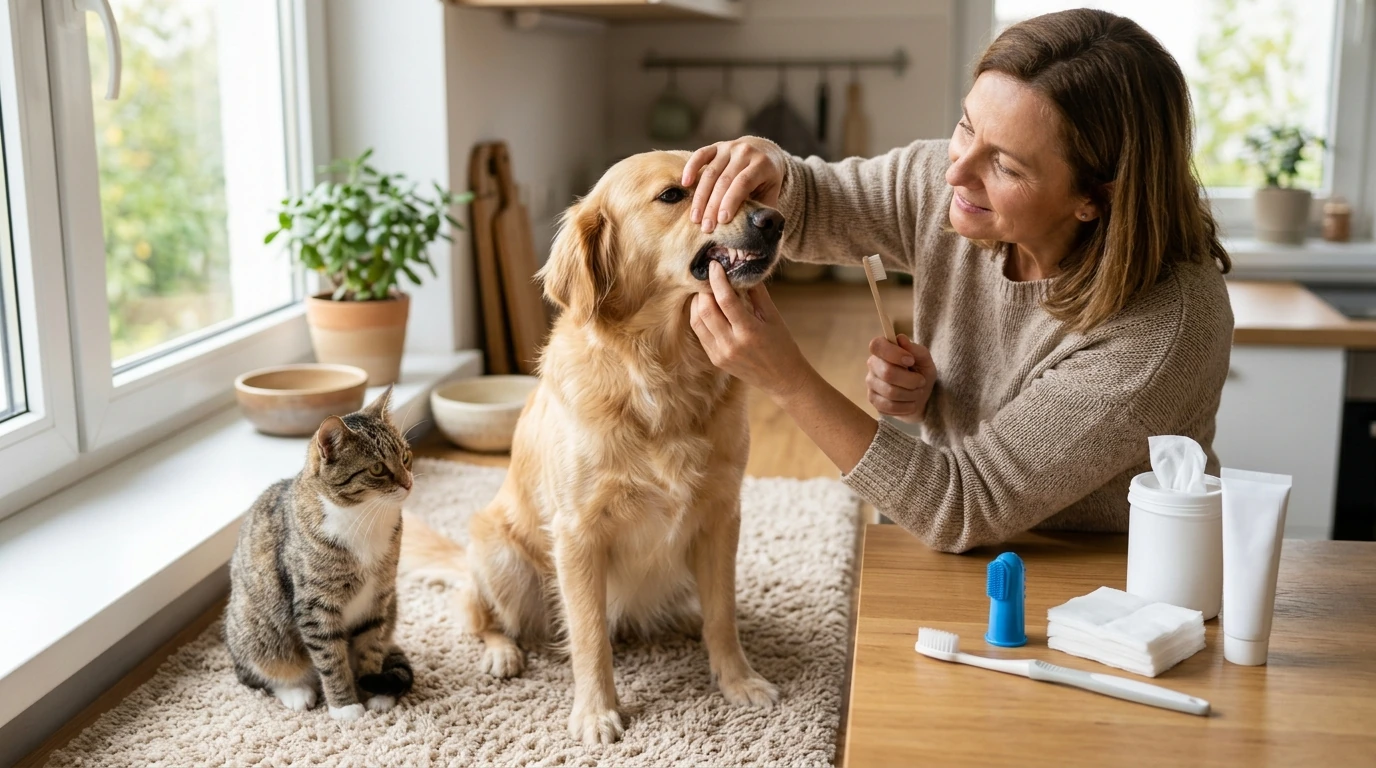
At-Home Pet Dental Care: A Simple Routine for Cleaner Teeth and Happier Pets
Bad breath is often the first clue that plaque and tartar are building up. A short, consistent at-home routine can reduce dental disease risk, improve comfort, and make professional cleanings easier. The goal isn’t perfection—it’s steady habits that fit real life, whether caring for a dog, cat, or both.
Why dental care matters more than fresh breath
Plaque doesn’t just cause odor. If it’s left alone, plaque hardens into tartar, which can lead to inflamed gums, mouth pain, and even loose teeth over time. Dental disease can also affect appetite, behavior, and overall wellness—especially in older pets and small breeds that tend to accumulate tartar quickly.
Early prevention is usually cheaper and far less stressful than treating advanced gum disease. Another challenge: many pets hide mouth pain, so routine at-home checks can catch problems before they become urgent. For veterinary guidance on oral health basics, see the American Veterinary Medical Association (AVMA) pet dental care resource.
Spot the early signs: quick mouth check at home
A fast mouth check once or twice a week can reveal changes early—often before a pet’s behavior makes it obvious. Keep it calm: lift the lip, look at the gumline, and note anything new.
- Breath changes: persistent odor that returns soon after eating or drinking.
- Gum changes: redness at the gumline, swelling, or bleeding when chewing toys.
- Visible buildup: yellow-brown tartar near the back teeth (premolars/molars).
- Behavior changes: pawing at the mouth, dropping food, chewing on one side, reluctance to play tug.
- When to call the vet promptly: broken tooth, facial swelling, pus at the gumline, or sudden refusal to eat.
The simplest routine that works (daily + weekly)
The most sustainable plan is the one a pet will tolerate. Aim for a short daily habit and a slightly longer weekly session. If brushing is brand new, start with handling and progress in small steps: touching lips → rubbing gums → introducing pet toothpaste → adding a brush. Consistency beats intensity; a gentle daily brush is better than an occasional deep scrub that creates stress.
- Daily (2–3 minutes): quick brush or wipe + a small reward to keep the habit positive.
- Weekly (5 minutes): longer brush session and a full mouth look—front teeth, canines, and back teeth.
At-home dental routine by comfort level
| Comfort level | What to do | Time needed | Progress goal |
|---|---|---|---|
| New to handling | Lift lip, touch muzzle, give treat | 30–60 sec | No pulling away |
| Tolerates mouth touch | Rub gums with finger or gauze wrap | 1–2 min | Gums touched on both sides |
| Ready for toothpaste | Introduce pet toothpaste flavor; lick from finger; then rub on gumline | 2 min | Toothpaste contact on back teeth |
| Brushing routine | Soft brush/finger brush; focus on outer surfaces and gumline | 2–3 min | Daily brush most days of week |
Tools that make home dental care easier
The right supplies can turn dental care from a wrestling match into a quick routine.
- Pet-safe toothpaste only: never use human toothpaste (some formulas contain xylitol, and many include ingredients not intended to be swallowed by pets).
- Brush options: a soft-bristle pet toothbrush for reach; a finger brush for control; or gauze for a gentle start.
- Dental wipes: helpful for pets that refuse brushes; aim along the gumline where plaque starts.
- Water additives and gels: can support freshening and plaque control, but brushing is typically the most effective at-home step.
- Chews and toys: choose size-appropriate dental options; supervise to reduce choking risk and avoid overly hard items that can fracture teeth.
If you want a straightforward plan to follow day-by-day, At-Home Guide to Pet Dental Care | Simple Pet Dental Care at Home Routine for Healthier Teeth & Happier Pets organizes the routine into quick, repeatable steps.
Step-by-step brushing without the struggle
A calm setup matters as much as technique. Pick a time when your pet is relaxed—often after a walk, a play session, or a meal.
Cats vs. dogs: small adjustments that help
Diet, chews, and habits that support cleaner teeth
To compare products that meet established plaque/tartar control standards, check the VOHC list of accepted products.
When home care isn’t enough: professional cleanings and next steps
After a professional cleaning, an at-home routine helps maintain results and may reduce how quickly tartar returns. Ask your veterinarian about the right cleaning schedule for your pet’s breed, age, mouth shape, and dental history. For an additional overview, the AAHA dental care guidance is a helpful reference.
A ready-to-follow checklist for the first 14 days
For pet parents who also run a pet-focused side hustle (pet sitting, grooming, or a small boutique), AI for Small Business Toolkit – 5-in-1 Digital Download Bundle can help streamline routine admin so daily pet care habits stay easier to maintain.
FAQ
How often should a pet’s teeth be brushed at home?
Aim for daily brushing when possible. If that isn’t realistic, start with 3–4 times per week and build up; even short sessions help, especially along the outer gumline.
Can dental chews replace brushing for dogs or cats?
No—chews can reduce plaque on chewing surfaces, but they don’t reliably clean along or under the gumline. Brushing remains the most effective at-home method, with chews used as a supplement.
Is human toothpaste safe for pets?
No. Use pet toothpaste only, since human toothpaste may contain ingredients that aren’t intended to be swallowed by pets and can cause stomach upset or be harmful.















Leave a comment