-
Shop
- Advanced Technologies
- AI Skills
- Bathroom
- Best-Sellers
- Car Accessories
- Confidence
- Dating & Social Skills
- Digital Resources
- AI & Technology
- Beauty
- Budgeting & Saving
- Car Buying & Ownership
- Cozy Feast Collection
- Electronics & Technology
- Entrepreneurship & Business Growth
- Financial Education
- Financial Independence
- Financial Mindset & Psychology
- Goal Setting
- Home Styling & Organization
- Kitchen & Recipes
- Leadership
- Mindfulness
- Mindset
- Online Business
- Parenting & Child Development
- Personal Style & Fashion
- Pet Lifestyle & Wellness
- Positive Thinking
- Sleep Improvement
- Smart Life with AI
- Stress Management & Relaxation
- Travel Planning
- Wellness
- Yoga & Fitness
- Yoga & Mind-Body Practices
- Education & Learning
- Family & Parenting
- Fashion
- Accessories
- Alexander McQueen
- Bags
- Bags & Wallets
- Balenciaga
- Belts
- Blazers
- Bottega Veneta
- Bottoms
- Brunello Cucinelli
- Burberry
- Chanel
- Chloé
- Dior
- Dolce & Gabbana
- Dresses
- Etro
- Fendi
- Gucci
- Hats & Hair Accessories
- Hoodies & Sweatshirts
- Jacquemus
- Jewelry
- Jil Sander
- Kiton
- Luggage
- Miu Miu
- Off-White
- Outerwear
- Prada
- Rick Owens
- Saint Laurent
- Shoes
- Socks & Tights
- Sweaters & Cardigans
- The Row
- Tom Ford
- Tops & Shirts
- Valentino
- Valentino Garavani
- Versace
- Vivienne Westwood
- Watches
- Fashion Accessories
- Furniture
- Gadgets
- Health & Beauty
- Health & Wellness
- Home & Garden
- Home Decor
- Home Electronics
- Home Supplies
- Kids & Babies
- Kitchen
- Kitchen Best-Sellers
- Lighting
- Patio, Lawn & Garden
- Personal Growth
- Pet Care
- Pet Supplies
- Pets
- Sport & Outdoors
- Super Deals
- Travel
- Travel & Adventure
- Wealth
- Popular
- Best deals
Solo Play Plan for Dogs & Cats When Home Alone
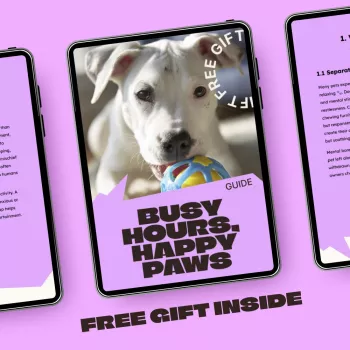
Busy Hours, Happy Paws: Stress-Free Solo Play Planning for Dogs & Cats
When pets are home alone, boredom can quickly turn into barking, scratching, chewing, or stressy pacing. A simple solo-play plan—built around the right toy types, smart rotation, and safe setup—can keep dogs and cats calmer, more engaged, and less likely to practice unwanted habits while the house is quiet.
Why being alone feels hard for pets
Most pets don’t “act out” out of spite. They’re responding to a gap: not enough movement, not enough mental work, or a schedule that’s suddenly confusing.
- Dogs often struggle with under-stimulation during long quiet stretches; some develop nuisance behaviors that become self-reinforcing (chew the couch once, feel relief, repeat).
- Cats may appear independent but still need opportunities to stalk, pounce, and problem-solve; without outlets, some over-groom or become disruptive at night.
- Stress spikes when a pet has unpredictable schedules, limited exercise, or a sudden change (new job hours, moving, new baby).
- Solo-play toys work best when paired with basics: adequate exercise, predictable departures, and a safe environment.
If you’re seeing behavior that looks like true separation distress (not just boredom), credible resources from the American Veterinary Medical Association and the ASPCA can help you recognize common signs.
Toy types that support calmer solo time
For solo time, the goal is usually “engaged and settled,” not “amped up.” These categories tend to create longer, steadier play.
- Food puzzles and slow feeders: extend eating time and provide a predictable “project” that can reduce idle stress.
- Lick-based enrichment (safe lick mats, stuffed chew toys): licking can be soothing and encourages longer engagement.
- Chew outlets for dogs: choose durability and size appropriate to chewing style; replace when cracked or pieces break off.
- Independent play for cats: track toys, rolling treat balls, and motion-free “hunt” toys that can be reset daily.
- Scent games: hidden treats or scent-dispensing toys can engage the nose (especially helpful for dogs) without high arousal.
To make planning easier (and less random), the digital guide Busy Hours, Happy Paws – A Practical Guide to Toys for Pets Left Alone breaks toy categories into practical time blocks you can repeat on workdays.
Match the toy to the pet: quick decision guide
Choosing “the best toy” is really choosing the best job for that moment: calm down, stay busy, move the body, or self-soothe.
- Start with the pet’s goal: calm (lick/chew), mentally busy (puzzle), physically active (bat/roll/chase), or comfort (snuggle-safe items).
- Use difficulty levels: too easy becomes boring; too hard becomes frustrating and may increase stress.
- Factor in age and health: seniors may prefer gentler puzzles; brachycephalic dogs may need wider openings; dental concerns may limit hard chews.
- Safety first: avoid strings, ribbons, or small detachable parts for unsupervised time unless specifically designed for it.
- Plan variety by category, not quantity: two or three well-chosen options rotated often beat a bin of ignored toys.
Toy selection cheatsheet for pets left alone
| Pet profile | Best solo-play toy types | Avoid or limit when unsupervised |
|---|---|---|
| Dog: high-energy, easily bored | Food puzzles, long-lasting chew, sniffing games | Thin plush that tears fast; tiny parts; high-arousal squeakers if they trigger frantic play |
| Dog: anxious or noise-sensitive | Lick mats, stuffed chew toys, gentle puzzles | Unpredictable motorized toys; loud crinkle/squeak if it increases vigilance |
| Cat: playful hunter | Rolling treat ball, track toys, “hunt” stations with hidden kibble | Loose strings/feathers that detach; small balls that can be swallowed |
| Cat: timid or easily overstimulated | Quiet batting toys, puzzle feeder, safe hide + toy nearby | Fast-moving automated toys left running; overstimulating catnip if it causes agitation |
A simple solo-play schedule that fits real workdays
A repeatable rhythm is often more calming than constant novelty. Try a “bookends + one reset” approach.
- Pre-departure: short walk or active play, then a calm-down window (sniffing, basic training, or gentle grooming).
- Departure handoff: deliver the most engaging item (stuffed chew or puzzle) right as leaving begins to build a predictable routine.
- Midday (if possible): quick reset—swap toys, refresh water, scatter a small portion of kibble for a low-effort “forage.”
- Return routine: greet calmly, then offer a structured activity (walk, play, training) so excitement doesn’t spill into demand behaviors.
- Rotation method: keep 6–10 total items, rotate 2–3 daily; novelty increases engagement without constantly buying more.
If your days are packed and consistency is the hardest part, a lightweight system can help. The AI for Small Business Toolkit – 5-in-1 Digital Download Bundle can be repurposed to draft checklists, reminders, and repeatable routines—useful for maintaining predictable pet schedules during busy seasons.
Home setup for safe, independent play
When toys aren’t enough
A practical resource for building a solo-play plan
For a ready-to-follow framework, Busy Hours, Happy Paws – A Practical Guide to Toys for Pets Left Alone focuses on practical rotation, safe setups, and choosing toy “jobs” that fit your dog or cat’s personality.
FAQ
What is the most common time for happy hour?
For pets, a “happy hour” routine often works best right after a pre-departure walk/play and again shortly after returning home. Keep the timing consistent so your pet can predict when enrichment happens.
Are there happy hours in Utah?
Yes—many places use “happy hour” promotions, but rules vary by city and venue. For pets, the more useful takeaway is that a consistent daily routine creates the same kind of predictable “special time,” no matter where you live.
Who has the best happy hour deals?
For pet enrichment, the best “deal” is a small rotation of durable, multi-use toys (puzzle + treat + chew/lick options) that can be reset with different fillings. You’ll get more calm, occupied time without constantly buying single-purpose items.
Recommended for you

Utah Happy Hour: What’s Legal and What to Expect
Jul 18, 2026











Leave a comment