-
Shop
- Advanced Technologies
- AI Skills
- Bathroom
- Best-Sellers
- Car Accessories
- Confidence
- Dating & Social Skills
- Digital Resources
- AI & Technology
- Beauty
- Budgeting & Saving
- Car Buying & Ownership
- Cozy Feast Collection
- Electronics & Technology
- Entrepreneurship & Business Growth
- Financial Education
- Financial Independence
- Financial Mindset & Psychology
- Goal Setting
- Home Styling & Organization
- Kitchen & Recipes
- Leadership
- Mindfulness
- Mindset
- Online Business
- Parenting & Child Development
- Personal Style & Fashion
- Pet Lifestyle & Wellness
- Positive Thinking
- Sleep Improvement
- Smart Life with AI
- Stress Management & Relaxation
- Travel Planning
- Wellness
- Yoga & Fitness
- Yoga & Mind-Body Practices
- Education & Learning
- Family & Parenting
- Fashion
- Accessories
- Alexander McQueen
- Bags
- Bags & Wallets
- Balenciaga
- Belts
- Blazers
- Bottega Veneta
- Bottoms
- Brunello Cucinelli
- Burberry
- Chanel
- Chloé
- Dior
- Dolce & Gabbana
- Dresses
- Etro
- Fendi
- Gucci
- Hats & Hair Accessories
- Hoodies & Sweatshirts
- Jacquemus
- Jewelry
- Jil Sander
- Kiton
- Luggage
- Miu Miu
- Off-White
- Outerwear
- Prada
- Rick Owens
- Saint Laurent
- Shoes
- Socks & Tights
- Sweaters & Cardigans
- The Row
- Tom Ford
- Tops & Shirts
- Valentino
- Valentino Garavani
- Versace
- Vivienne Westwood
- Watches
- Fashion Accessories
- Furniture
- Gadgets
- Health & Beauty
- Health & Wellness
- Home & Garden
- Home Decor
- Home Electronics
- Home Supplies
- Kids & Babies
- Kitchen
- Kitchen Best-Sellers
- Lighting
- Patio, Lawn & Garden
- Personal Growth
- Pet Care
- Pet Supplies
- Pets
- Sport & Outdoors
- Super Deals
- Travel
- Travel & Adventure
- Wealth
- Popular
- Best deals
4 Season Color Analysis System: How It Works
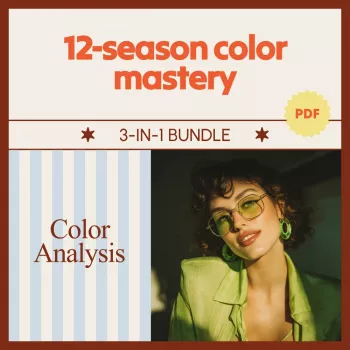
What is the 4 season color analysis system?
The 4 season color analysis system is a simple way to find the colors that tend to look most harmonious on you by grouping coloring into four seasonal categories: Spring, Summer, Autumn, and Winter. Each “season” represents a general combination of undertone (warm vs. cool), value (light vs. deep), and chroma (soft/muted vs. bright/clear). The goal is to make shopping and outfit planning easier by narrowing your best shades into a consistent palette.
How the four seasons are defined
While individual features vary, the system focuses on the overall effect of your skin, hair, and eyes together—especially how your complexion reacts to color near your face.
Spring (warm + light/bright)
Spring palettes are typically warm, clear, and lively. Think fresh, sunny colors rather than dusty or heavily shaded tones—often lighter to medium in depth with a crisp, upbeat feel.
Summer (cool + light/soft)
Summer palettes lean cool and more muted. Colors often look best when they’re softened (like a “washed” or misty version of a hue) rather than intense or highly saturated.
Autumn (warm + deep/soft)
Autumn palettes are usually warm and richer, with an earthy quality. Many flattering shades are medium to deep and slightly muted—more “spiced” than bright.
Winter (cool + deep/bright)
Winter palettes are typically cool with strong contrast and clarity. Shades often look best when they’re bold, crisp, and more saturated, including deeper jewel-like colors.
Why people use it for shopping
Once you know your season, it’s easier to choose clothing, makeup, and accessories that make skin look more even, eyes look clearer, and overall styling feel cohesive. It can also reduce impulse buys by giving you a quick “yes/no” filter for color.
Want a more detailed palette than four categories?
The 4 season system is a starting point, but many people fit best into a more specific sub-season. For a deeper breakdown (including how the 12-season approach refines the classic four), visit this 12-season color analysis guide.
FAQ
What’s the difference between 4 season and 12 season color analysis?
The 4 season system assigns you to Spring, Summer, Autumn, or Winter, while the 12 season system adds sub-seasons (like Soft Summer or Deep Autumn) to capture more nuance in brightness, depth, and contrast.
Recommended for you


Rewrite Your Money Story: 4-Week Mindset Reset
Jul 14, 2026








Leave a comment