-
Shop
- Advanced Technologies
- AI Skills
- Bathroom
- Best-Sellers
- Car Accessories
- Confidence
- Dating & Social Skills
- Digital Resources
- AI & Technology
- Beauty
- Budgeting & Saving
- Car Buying & Ownership
- Cozy Feast Collection
- Electronics & Technology
- Entrepreneurship & Business Growth
- Financial Education
- Financial Independence
- Financial Mindset & Psychology
- Goal Setting
- Home Styling & Organization
- Kitchen & Recipes
- Leadership
- Mindfulness
- Mindset
- Online Business
- Parenting & Child Development
- Personal Style & Fashion
- Pet Lifestyle & Wellness
- Positive Thinking
- Sleep Improvement
- Smart Life with AI
- Stress Management & Relaxation
- Travel Planning
- Wellness
- Yoga & Fitness
- Yoga & Mind-Body Practices
- Education & Learning
- Family & Parenting
- Fashion
- Accessories
- Alexander McQueen
- Bags
- Bags & Wallets
- Balenciaga
- Belts
- Blazers
- Bottega Veneta
- Bottoms
- Brunello Cucinelli
- Burberry
- Chanel
- Chloé
- Dior
- Dolce & Gabbana
- Dresses
- Etro
- Fendi
- Gucci
- Hats & Hair Accessories
- Hoodies & Sweatshirts
- Jacquemus
- Jewelry
- Jil Sander
- Kiton
- Luggage
- Miu Miu
- Off-White
- Outerwear
- Prada
- Rick Owens
- Saint Laurent
- Shoes
- Socks & Tights
- Sweaters & Cardigans
- The Row
- Tom Ford
- Tops & Shirts
- Valentino
- Valentino Garavani
- Versace
- Vivienne Westwood
- Watches
- Fashion Accessories
- Furniture
- Gadgets
- Health & Beauty
- Health & Wellness
- Home & Garden
- Home Decor
- Home Electronics
- Home Supplies
- Kids & Babies
- Kitchen
- Kitchen Best-Sellers
- Lighting
- Patio, Lawn & Garden
- Personal Growth
- Pet Care
- Pet Supplies
- Pets
- Sport & Outdoors
- Super Deals
- Travel
- Travel & Adventure
- Wealth
- Popular
- Best deals
Make Corners Safe for Babies: Guards, Layout & Checks
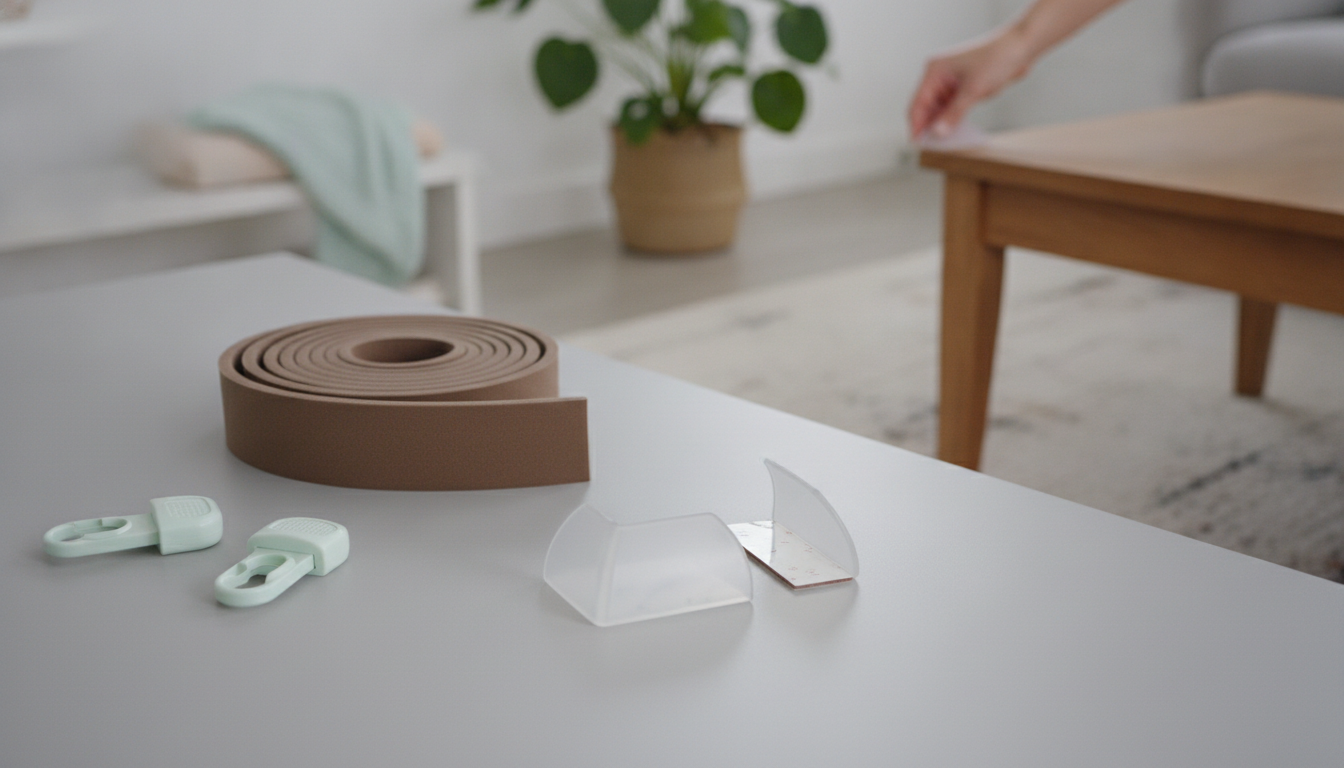
How to make corners safe for babies?
Sharp table edges, low shelves, and countertop corners sit right at baby head-height once crawling and cruising begin. The safest approach combines physical barriers with smarter room layout, then regular checks as your child gets stronger and more curious.
1) Identify the highest-risk corners first
Start with coffee tables, TV stands, fireplace hearths, low windowsills, and bed frames. Get down on the floor and look for any hard, pointed edges within reach of where your baby crawls, pulls up, or toddles. Prioritize areas where falls are most likely, such as near sofas, play zones, and hallway turns.
2) Choose the right type of corner protection
For most living spaces, cushioned corner guards or edge bumpers reduce injury from bumps and slips. Look for thick, shock-absorbing material and a shape that wraps the corner rather than covering only the tip. In higher-impact zones (like heavy wood tables), consider sturdier guards that won’t compress flat easily.
3) Make adhesion dependable
Corner protectors only work when they stay put. Clean the surface with soap and water, dry fully, and remove oils or polish residue before applying. Press firmly for the time recommended by the manufacturer, and avoid moving the furniture immediately afterward so the adhesive can set.
4) Reposition furniture to reduce collisions
If a sharp-edged piece sits in a main walking path, moving it a few inches can prevent repeated bumps. Creating wider “lanes” between seating and tables helps toddlers keep balance. If possible, swap a hard-edged coffee table for an ottoman while your baby is in the most wobbly stage.
5) Inspect often and replace when needed
Babies tug, chew, and peel. Check guards weekly for loose edges, gaps, or torn foam. Replace any protector that no longer fits snugly, since a partially detached guard can become a choking hazard.
For more detailed options and product types, visit How to make corners safe for babies.
FAQ
How do you babyproof sharp edges on furniture?
Use edge and corner guards on tables, stands, and low shelves, and clean surfaces first so adhesive sticks well. If an item is in a high-traffic path, reposition it or temporarily replace it with softer furniture.
Recommended for you



Fear of Judgment: 10-Min Checklist to Speak Up
Jul 6, 2026












Leave a comment